

How AI Is Transforming Restaurant Revenue in 2026
AI is no longer a future concept for restaurants. It’s the engine driving smarter pricing, sharper marketing, and predictable revenue growth in 2026.
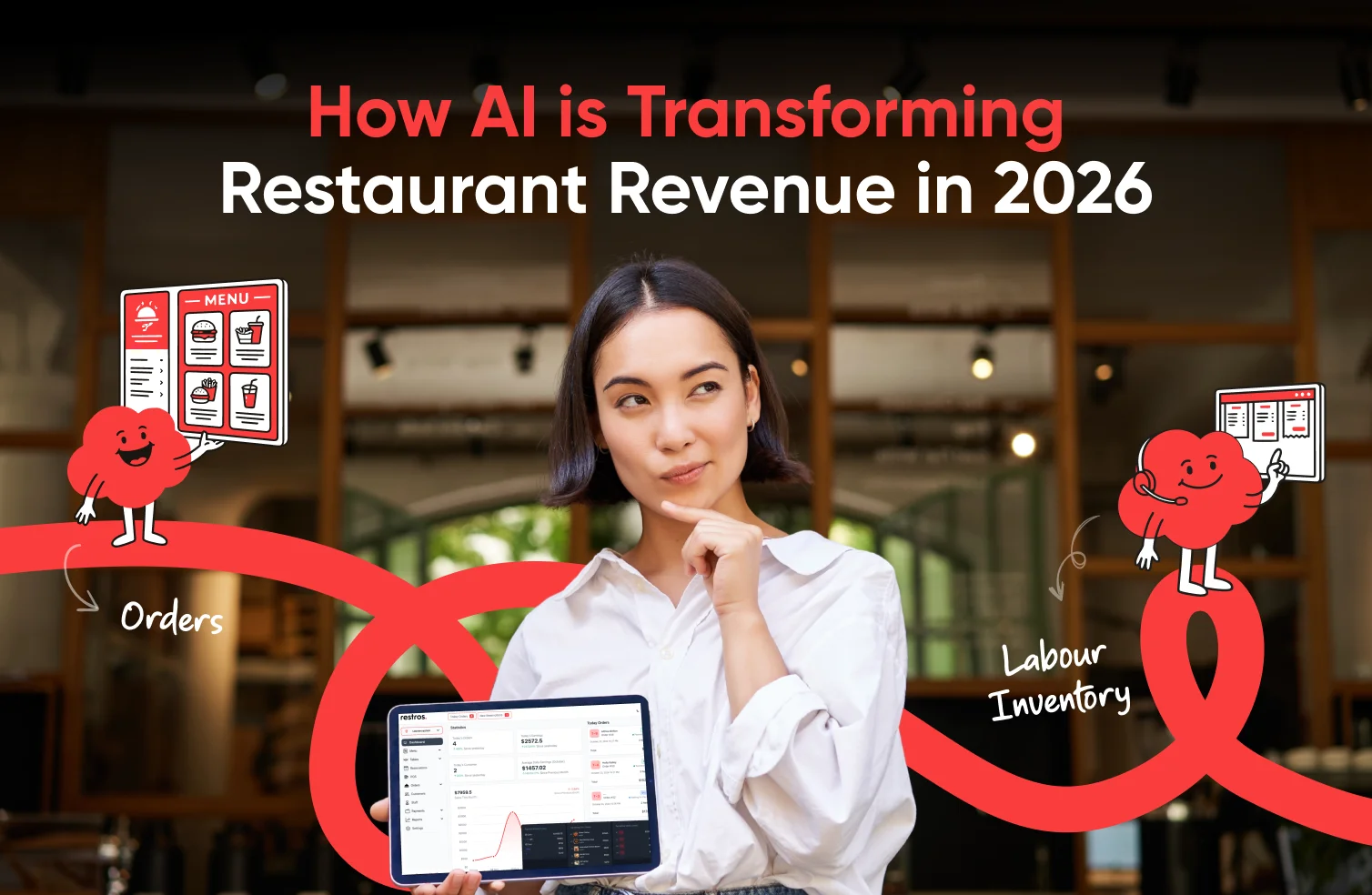
In 2026, restaurant revenue isn’t just influenced by footfall, food quality, or location anymore. It’s influenced by data and more importantly, by how intelligently that data is used.
Restaurants today are operating in one of the most competitive and margin-sensitive environments the industry has ever seen. Delivery commissions are high. Labor costs are unpredictable. Food inflation fluctuates. Customer loyalty is fragile.
And yet, some restaurants are not just surviving they’re scaling faster than ever.
What’s different?
They’re using AI not as a trend, but as a revenue engine.
Let’s explore how artificial intelligence is fundamentally changing how restaurants earn, protect, and grow revenue in 2026.
The Hidden Revenue Leaks Most Restaurants Don’t See
Most restaurant owners believe revenue problems come from low traffic.
But in reality, the bigger issue is usually inefficiency.
Revenue leaks don’t shout. They hide in small daily decisions-
- A popular dish with weak margins.
- A delivery platform driving volume but killing profitability.
- Staff over-scheduled during slow hours.
- Ingredients over-prepped and wasted.
- Discount campaigns that increase orders but reduce net earnings.
Traditional reporting shows what happened.
AI explains why it happened and what to fix next.
That shift from reactive to proactive decision-making is where revenue transformation begins.
From Guesswork to Predictive Demand Planning
Before AI, forecasting demand meant looking at last month’s numbers and making an educated guess.
In 2026, predictive systems analyze historical data, weather patterns, local events, holiday trends, and even ordering behavior across platforms to forecast demand with precision.
This means restaurants can-
- Prepare the right quantity of ingredients
- Schedule the right number of staff
- Avoid last-minute chaos during rushes
- Prevent overstocking during slow periods
The impact isn’t just operational smoothness. It’s financial control.
When restaurants align prep, purchasing, and staffing with accurate demand forecasts, they reduce waste and improve margins simultaneously.
AI turns planning into a strategic advantage instead of a reactive process.
Menu Intelligence- Profit Over Popularity
One of the biggest mindset shifts AI has introduced in 2026 is this-
Popularity does not equal profitability.
A dish might sell frequently but generate minimal contribution margin. Another item may sell less often but deliver strong profit per order.
AI-powered menu intelligence evaluates not just sales volume but-
- Item-level margins
- Add-on behavior
- Platform-specific performance
- Time-of-day profitability
- Pricing sensitivity
Instead of redesigning menus based on intuition, restaurants now engineer them based on contribution data.
Small adjustments such as repositioning a high-margin item or optimizing bundle placement can increase average order value without increasing marketing spend.
Revenue growth no longer depends only on attracting more customers. It depends on maximizing value per customer.
Smarter Promotions That Protect Margins
Discounting used to be a blunt instrument.
Need more orders? Offer 20% off.
But in 2026, AI has changed the way promotions work.
By analyzing customer behavior and historical performance, AI identifies-
- Which customers respond to price-based offers
- Which segments prefer loyalty perks
- Which items can be bundled profitably
- When demand is likely to dip
Instead of discounting entire menus, restaurants now deploy targeted, margin-conscious campaigns.
For example, pushing a high-margin side item during slower afternoon hours can increase ticket size without reducing main-course profitability.
This isn’t about offering more discounts.
It’s about offering smarter incentives.
Customer Intelligence- Turning Data Into Loyalty
Acquiring new customers is expensive. Retaining them is profitable.
In 2026, AI enables restaurants to understand customer behavior in ways that were previously limited to large tech platforms.
AI systems track visit frequency, spending patterns, order preferences, and response behavior. This allows restaurants to identify-
- High-value repeat customers
- Customers at risk of churn
- Infrequent visitors who need reactivation
- Price-sensitive segments
Instead of mass messaging, restaurants now communicate strategically.
A lapsed customer might receive a personalized offer based on their previous favorite dish. A high-value customer might receive early access to a new menu launch. When engagement becomes relevant, revenue becomes predictable.
Optimizing Delivery Without Losing Profit
Delivery platforms remain essential in 2026 but they come with high commission costs and competitive ranking algorithms.
AI helps restaurants understand the true profitability of each platform.
Instead of focusing only on gross sales, operators can evaluate-
- Net margin after commission
- Cancellation trends
- Rating impact on visibility
- Item-level performance by platform
This clarity allows restaurants to adjust pricing strategies, menu placement, and promotional tactics across delivery apps.
Some brands have improved delivery profitability simply by rebalancing platform focus and refining pricing logic. AI doesn’t eliminate delivery costs. It makes them manageable.
Reducing Waste, Increasing Control
Food waste is one of the most underestimated revenue drains in restaurant operations.
In 2026, AI-powered inventory systems connect sales forecasts with ingredient usage. They monitor consumption patterns and flag potential overstock risks before losses occur.
When purchasing aligns with predicted demand, waste decreases naturally.
Even a small reduction in waste percentage significantly impacts bottom-line profitability, especially for high-volume kitchens. AI brings discipline to inventory management without adding manual complexity.
Labor Optimization as a Revenue Lever
Labor is not just a cost center. It directly impacts service quality and revenue consistency.
AI-driven scheduling tools analyze demand forecasts and recommend optimized staffing plans.
Instead of static weekly schedules, restaurants adopt dynamic planning models that adjust to expected traffic patterns.
This reduces idle hours during slow periods and prevents understaffing during peak times.
Better staffing alignment improves service speed, customer satisfaction, and repeat visits all of which influence long-term revenue growth.
Real-Time Visibility Changes Everything
Perhaps the most transformative shift AI brings in 2026 is speed.
Restaurant owners no longer wait for month-end reports to understand performance.
Modern AI dashboards provide real-time revenue tracking, anomaly alerts, and automated insights.
- If average order value drops unexpectedly, operators know immediately.
- If ingredient usage spikes unusually, they’re notified instantly.
- If a high-margin item underperforms during dinner hours, it’s highlighted.
Faster insights lead to faster decisions. And faster decisions protect revenue.
The Strategic Shift- From Reactive to Proactive Growth
The real transformation AI delivers isn’t automation. It’s visibility.
Restaurants move from reacting to problems after they occur to preventing them before they impact revenue.
They shift from guessing to forecasting.
From discounting blindly to promoting strategically.
From tracking sales to engineering profit.
In 2026, the most successful restaurants aren’t necessarily the largest chains or the most funded brands. They are the ones that treat data as a strategic asset.
Final Takeaway- Intelligence Is the New Ingredient
The restaurant industry has always been driven by creativity and hospitality.
In 2026, intelligence becomes the silent ingredient behind sustainable growth.
AI is transforming restaurant revenue by-
- Increasing average order value
- Protecting margins
- Reducing waste
- Improving retention
- Optimizing operations
It doesn’t replace restaurateurs. It empowers them.
And in an industry where margins are thin and competition is fierce, that empowerment makes all the difference.
In this article